
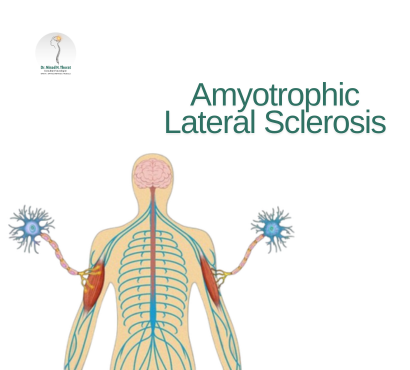
ALS (Amyotrophic Lateral Sclerosis) is a progressive neurological disorder that affects the nerve cells responsible for controlling voluntary muscle movement. It belongs to a group of conditions known as motor neuron diseases, where communication between the brain and muscles gradually weakens over time.
ALS leads to muscle weakness, loss of movement control, and eventually difficulty with speaking, swallowing, and breathing. While the disease currently has no cure, early diagnosis and supportive treatment can significantly improve quality of life and slow progression in some cases.
Understanding ALS symptoms, risk factors, and available treatment options helps patients and families manage the condition more effectively.
What Is ALS (Amyotrophic Lateral Sclerosis)?
ALS is a condition in which motor neurons, the nerve cells responsible for muscle movement, gradually degenerate and stop functioning.
Motor neurons include:
- Upper motor neurons (brain to spinal cord)
- Lower motor neurons (spinal cord to muscles)
As these neurons deteriorate:
- Muscles weaken
- Movement becomes difficult
- Coordination declines
- Muscle wasting develops
Eventually, the body loses the ability to perform voluntary movements.
Why ALS Is Also Called Motor Neuron Disease
ALS is one of the most common forms of motor neuron disease (MND).
The term describes disorders affecting:
- Muscle movement control
- Speech
- Swallowing
- Breathing
ALS specifically affects both upper and lower motor neurons, which leads to progressive muscle weakness throughout the body.
Early Symptoms of ALS
Early symptoms of ALS may be subtle and often mistaken for general fatigue or muscle strain.
Common early warning signs include:
Muscle Weakness
Usually begins in:
- Hands
- Legs
- Arms
- Feet
Patients may notice difficulty holding objects or climbing stairs.
Muscle Twitching (Fasciculations)
Involuntary muscle movements are common early indicators.
Slurred Speech
Speech may become unclear due to weakened facial muscles.
Difficulty Swallowing
Some individuals experience choking while eating.
Frequent Tripping or Falling
Balance and coordination gradually decline.
Recognizing these symptoms early supports timely neurological evaluation.
Advanced Symptoms of ALS
As ALS progresses, symptoms become more severe and widespread.
These include:
- Severe muscle weakness
- Muscle wasting
- Difficulty walking
- Loss of hand function
- Breathing difficulty
- Speech impairment
- Swallowing problems
Eventually, patients require assistance with daily activities.
Causes of ALS
The exact cause of ALS is not fully understood. However, several factors may contribute to disease development.
Genetic Factors
Approximately 5–10% of ALS cases are inherited.
These are known as familial ALS.
Environmental Factors
Possible triggers include:
- Exposure to toxins
- Heavy metals
- Air pollution
- Agricultural chemicals
Research is ongoing to confirm these links.
Age
ALS is more commonly diagnosed between ages 40 and 70.
Gender
Men are slightly more likely to develop ALS than women.
Risk Factors Associated With ALS
Although anyone can develop ALS, certain risk factors increase likelihood.
These include:
- Family history of ALS
- Smoking
- Military service exposure risks
- Occupational toxin exposure
- Increasing age
Understanding risk factors supports early medical monitoring.
How ALS Affects the Nervous System
ALS damages motor neurons that carry signals from the brain to muscles.
As communication weakens:
- Muscles stop responding properly
- Movement becomes restricted
- Muscle tissue shrinks over time
Importantly, ALS usually does not affect intelligence, memory, or senses in most patients.
However, some individuals may experience mild cognitive changes.
How ALS Is Diagnosed
Diagnosing ALS can be challenging because symptoms resemble other neurological conditions.
Doctors typically perform multiple evaluations.
Neurological Examination
Checks muscle strength, reflexes, and coordination.
Electromyography (EMG)
Measures electrical activity in muscles.
Helps detect nerve damage.
Nerve Conduction Studies
Assess signal transmission between nerves and muscles.
MRI Scan
Used to rule out other neurological disorders.
Blood and Urine Tests
Help exclude alternative causes of symptoms.
Diagnosis is based on combined clinical findings rather than a single test.
Stages of ALS Progression
ALS progression varies among individuals but generally follows predictable stages.
Early Stage
Symptoms include:
- Muscle weakness
- Twitching
- Mild coordination problems
Daily activities remain mostly independent.
Middle Stage
Symptoms expand to multiple muscle groups.
Patients may experience:
- Walking difficulty
- Speech changes
- Swallowing problems
Supportive devices may become necessary.
Late Stage
Severe muscle weakness develops.
Patients may experience:
- Limited movement
- Breathing difficulties
- Need for assisted ventilation
Supportive care becomes essential.
Treatment Options for ALS
Although ALS currently has no cure, treatment focuses on slowing progression and improving quality of life.
Medications
Certain medications may:
- Slow disease progression
- Reduce nerve damage
- Manage symptoms
Physical Therapy
Helps maintain muscle strength and flexibility.
Prevents joint stiffness.
Speech Therapy
Supports communication ability as speech weakens.
Occupational Therapy
Assists patients in adapting daily routines.
Improves independence.
Respiratory Support
Breathing assistance may be required in later stages.
Multidisciplinary care improves overall patient outcomes.
Importance of Nutritional Support in ALS
Maintaining proper nutrition becomes difficult as swallowing muscles weaken.
Balanced nutrition helps:
- Maintain body weight
- Improve energy levels
- Support immune function
Dietary adjustments are often recommended by specialists.
Role of Assistive Devices in ALS Care
Supportive devices improve mobility and independence.
Common examples include:
- Walking aids
- Wheelchairs
- Communication devices
- Feeding assistance tools
- Breathing support equipment
These technologies significantly enhance quality of life.
Emotional and Psychological Impact of ALS
Living with ALS affects both physical and emotional health.
Patients may experience:
- Anxiety
- Depression
- Frustration
- Social isolation
Mental health support plays an important role in overall care management.
Family support also contributes to improved coping ability.
Can ALS Be Prevented?
Currently, there is no proven way to prevent ALS.
However, maintaining general neurological health may reduce overall risk.
Healthy lifestyle habits include:
- Regular physical activity
- Avoiding smoking
- Reducing toxin exposure
- Eating balanced nutrition
- Managing chronic diseases
Early neurological consultation improves management outcomes.
When Should You Consult a Doctor?
Medical evaluation is recommended if symptoms appear such as:
- Persistent muscle weakness
- Muscle twitching
- Difficulty speaking
- Trouble swallowing
- Loss of coordination
- Frequent falls
Early neurological assessment helps rule out serious conditions.
FAQ
1. Is ALS a hereditary disease?
Only about 5–10% of ALS cases are inherited. Most cases occur without a family history.
2. Does ALS affect thinking ability?
Most patients retain normal intelligence, although mild cognitive changes can occur in some individuals.
3. Can ALS be cured?
Currently, there is no cure for ALS, but treatment helps slow progression and improves quality of life.