
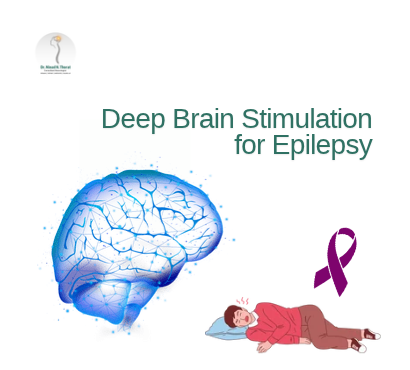
For many people with epilepsy, medicines control seizures well enough to allow a stable and active life. But for others, seizures continue despite trying multiple anti-seizure medications. These are the patients who often begin to hear terms like drug-resistant epilepsy, epilepsy surgery workup, neurostimulation, and device-based therapy. It can sound overwhelming at first, especially for families who have already spent years trying tablets, dose adjustments, emergency visits, and lifestyle restrictions.
Deep brain stimulation, or DBS, is one of the advanced treatment options used for certain people with hard-to-control epilepsy. It is not the first treatment step, and it is not meant for every patient with seizures. But in the right person, it can significantly reduce seizure frequency and improve quality of life, which is why it is often described as a life-changing option. Mayo Clinic states that DBS usually does not eliminate seizures completely, but it can significantly reduce them in many patients.
The idea of brain surgery naturally causes anxiety. Patients often worry that DBS means a dangerous or last-resort procedure with uncertain benefit. In reality, DBS is a structured, carefully selected therapy that involves implanting electrodes in a targeted brain region and connecting them to a pulse generator placed under the skin near the chest. The device then sends electrical impulses at programmed intervals to help reduce seizures.
Another important point is that DBS is not the same as removing part of the brain. It is a stimulation-based therapy, and one reason it attracts interest is that it can be considered in some people whose seizure focus cannot be safely pinpointed for resective surgery or cannot be removed without unacceptable risk. Mayo Clinic specifically notes this as one of the reasons DBS may be attractive in selected patients.
This blog explains what deep brain stimulation for epilepsy is, who may qualify, how the implanted system works, what the surgery involves, what results patients can realistically expect, and what risks and limitations should be understood before treatment.
What is deep brain stimulation?
Deep brain stimulation is a treatment in which thin electrodes are implanted into a specific deep part of the brain, and those electrodes are connected to a battery-powered generator placed under the skin, usually near the collarbone. The system delivers electrical pulses that affect brain activity in ways that can help reduce seizures in selected epilepsy patients.
For epilepsy, DBS is an implanted therapy used as an adjunctive treatment, meaning it is typically added to ongoing medical management rather than replacing all other care immediately. FDA approval information states that it is indicated as an adjunctive therapy for reducing seizure frequency in certain adults with refractory epilepsy.
Who is it usually for?
DBS is generally considered for people with drug-resistant epilepsy, meaning seizures continue despite appropriate trials of anti-seizure medicines. Mayo Clinic notes that DBS is often used for people whose seizures do not get better with medication.
FDA approval in the United States specifies adults 18 years or older with epilepsy characterized by partial-onset seizures, with or without secondary generalization, that are refractory to three or more anti-epileptic medications. The FDA also notes that the approved system demonstrated safety and effectiveness in patients averaging six or more seizures per month over the three most recent months before implant.
Which brain area is targeted?
For the FDA-approved epilepsy indication, DBS commonly targets the anterior nucleus of the thalamus, often abbreviated ANT. PubMed and FDA sources note that anterior nucleus of the thalamus stimulation has been approved for focal-onset drug-resistant epilepsy based on evidence from the SANTE trial and related research.
The thalamus acts as a relay hub in the brain, helping distribute signals between different regions. Mayo Clinic explains that the implanted lead is placed in the thalamus, where stimulation can help reduce seizure activity over time.
How the system works
The DBS system has two main implanted parts: the brain electrodes and the pulse generator. The electrodes are placed in the targeted deep brain region, and the generator is implanted under the skin near the chest, where it sends regular electrical pulses through the connecting wires.
These pulses are programmed by the treating team and adjusted over time. The goal is not to shock the patient awake during a seizure, but to modulate brain circuits in a way that reduces seizure frequency and burden over the long term.
What does the surgery involve?
Mayo Clinic describes DBS for epilepsy as a procedure in which a thin wire lead with several contacts is implanted into the thalamus, and then a battery-powered pulse generator is implanted near the collarbone after imaging confirms proper lead placement. This generally takes place as a surgical procedure under anesthesia.
Although it is a major intervention, it is still different from open resective brain surgery. The treatment is based on placing hardware for stimulation rather than removing a seizure-producing part of the brain. That distinction is often important for families deciding between options.
Does DBS cure epilepsy?
No. DBS is not usually presented as a cure for epilepsy. Mayo Clinic clearly states that in most people it does not completely eliminate seizures, but it can significantly reduce seizure frequency.
That is a crucial expectation-setting point. The goal is typically fewer seizures, better safety, and improved quality of life rather than a guaranteed seizure-free outcome. For some patients, even a partial reduction can be deeply meaningful if it lowers injuries, emergency visits, or seizure clustering.
What results can patients expect?
Clinical data cited by Mayo Clinic report that around 15 percent of patients in a large trial became seizure-free for more than six months after DBS, while about 50 to 60 percent had a decrease in seizures. Mayo Clinic also notes that among responders, seizure counts continued to decline over time.
This is why DBS can be life-changing even without being curative. A person who moves from frequent disabling seizures to substantially fewer events may regain confidence, independence, and a wider range of daily activities.
Why it may be considered “life-changing”
The phrase life-changing should be used carefully, but in epilepsy it can be appropriate when a treatment substantially lowers seizure burden after years of poor control. Fewer seizures may mean fewer injuries, less fear during travel, improved social participation, better sleep for caregivers, and more stability in work or education. Mayo Clinic specifically describes the improvement as significant and often life-changing for some individuals.
Not every patient has a dramatic response, but the possibility of meaningful functional improvement is real. That is why DBS remains an important option in comprehensive epilepsy care for carefully selected patients.
Is DBS reversible?
One feature that makes DBS attractive is that it is considered reversible. Mayo Clinic notes that if DBS is ineffective for a patient, the electrodes and generator can be removed without injuring the brain.
This does not mean the decision is casual, because implantation still requires surgery. But it does mean the treatment is different from irreversible brain tissue removal, which some families find reassuring during decision-making.
What are the risks?
DBS is a surgical therapy, so risks must be discussed honestly. Mayo Clinic notes that although DBS is a major surgical procedure, the risks are fairly low compared with some other types of brain surgery.
Practical risks can include infection, bleeding, lead-related issues, device problems, anesthesia-related complications, and the need for follow-up programming or battery management. These details are part of the pre-surgical counseling process and vary by patient and center.
How is DBS different from other stimulation devices?
Patients sometimes hear about vagus nerve stimulation or responsive neurostimulation and wonder whether they are the same as DBS. They are not. Mayo Clinic explains that DBS uses implanted electrodes in the brain, typically the thalamus, connected to a chest generator that sends regular timed pulses, whereas responsive neurostimulation detects seizure-related activity and delivers stimulation in response.
This difference matters because device choice depends on seizure type, seizure focus, overall epilepsy workup, and whether the seizure onset zone can be identified. Neurostimulation is not one single technology but a family of device-based strategies.
Why specialist evaluation is essential
DBS is not chosen based on seizure frequency alone. Patients usually need evaluation at a center experienced in epilepsy surgery and neuromodulation, where the team can confirm the diagnosis, review medication history, assess seizure type, and determine whether the person is a candidate for resection, stimulation, or another approach.
This specialist approach matters because some patients benefit more from a different procedure, while others are ideal candidates for DBS because their seizures remain uncontrolled and the seizure origin cannot be safely targeted for removal.
When should families ask about DBS?
Families may need to ask about DBS when seizures remain uncontrolled despite multiple appropriate medications, when daily safety and quality of life are heavily affected, or when the person is already entering discussion about advanced epilepsy treatment. The key is not waiting until hope is lost, but recognizing when standard treatment is clearly falling short.
Patients and families facing uncontrolled seizures, repeated medication failure, or questions about advanced device-based therapy may benefit from consultation with a Neurologist In Nashik when structured epilepsy evaluation and treatment planning are becoming necessary.
People trying to understand broader seizure management pathways, neurological warning signs, or specialized treatment options can also explore educational guidance under Neurology Care for more patient-focused neurology information.
Conclusion
Deep brain stimulation is an advanced treatment option for certain adults with drug-resistant epilepsy, especially when seizures continue despite multiple medications and other approaches are not suitable or sufficient. It works by delivering programmed electrical stimulation to deep brain structures, most commonly the anterior nucleus of the thalamus, through an implanted system connected to a generator in the chest.
The most important message is that DBS is not a miracle cure, but it can be a major turning point. Many patients do not become completely seizure-free, yet a meaningful reduction in seizure frequency can still transform daily life, independence, and long-term outlook. That is why, for the right patient, deep brain stimulation can truly be a life-changing option.
FAQs
1. Is deep brain stimulation a cure for epilepsy?
No. DBS usually does not eliminate seizures completely, but it can significantly reduce seizure frequency in many patients.
2. Who may qualify for DBS for epilepsy?
It is generally considered for adults with drug-resistant epilepsy whose seizures persist despite multiple anti-seizure medications, particularly in approved focal or partial-onset cases.
3. Where is the DBS electrode placed for epilepsy?
For the approved epilepsy indication, the system commonly targets the anterior nucleus of the thalamus