
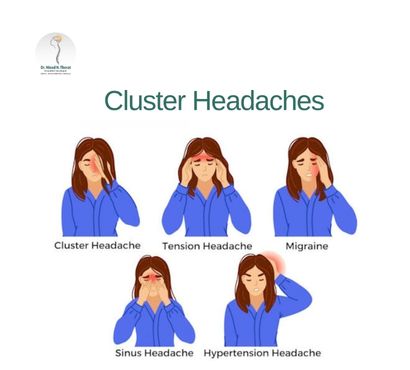
Headaches are common, but cluster headaches are different. They are rare, extremely painful, and often described as one of the most severe types of head pain, usually centered in or around one eye on one side of the head. These attacks tend to come in repeated bouts called cluster periods, with individual attacks often lasting 15 minutes to 3 hours and sometimes recurring multiple times a day.
What makes cluster headaches especially confusing is their pattern. A person may feel completely normal for weeks or months, then suddenly begin having intense attacks at nearly the same time each day or night. These cycles can continue for weeks or months before settling down again, which is why many patients struggle to understand what is happening until the pattern becomes obvious.
Unlike migraine, cluster headache sufferers are often restless during an attack rather than wanting to lie quietly in a dark room. Many pace, rock, press the painful side of the face, or feel unable to stay still because the pain is so intense. This behavior is one of the classic clues that helps distinguish cluster headache from other common headache disorders.
Another reason this condition is misunderstood is that the pain may come with eye redness, tearing, a drooping eyelid, or a blocked nostril on the same side. Some patients first think they have a sinus issue, an eye problem, or dental pain rather than a headache disorder. Recognizing the full symptom pattern matters because proper diagnosis can lead to much faster relief.
This blog explains what cluster headaches are, why they come in cycles, what symptoms define them, which triggers can worsen attacks, how they differ from migraine, and what treatment options patients should know about.
What is a cluster headache?
Cluster headache is a rare and severe headache disorder that causes intense one-sided pain, typically in, behind, or around one eye. The pain may spread to the temple, face, head, or neck, but it usually remains strongly one-sided during a given cluster. Mayo Clinic describes cluster headache as severe pain in or around one eye on one side of the head that occurs in bouts called cluster periods.
The word “cluster” refers to the timing pattern. Attacks usually occur in repeated cycles over weeks or months, followed by a remission period when headaches stop for some time. This episodic pattern is one of the defining features of the disorder.
Why the pain feels so extreme
Cluster headaches are not ordinary severe headaches. Patients often describe the pain as sharp, stabbing, burning, or like a hot poker or ice pick behind the eye. The intensity usually rises quickly, often peaking within minutes, which adds to the panic and distress of the episode.
This rapid escalation is one reason cluster headache is feared by people who have it. The attack does not slowly build over many hours in the way some migraines do; it often strikes suddenly and forcefully. That abrupt intensity is a key part of the condition’s clinical identity.
Why they come in cycles
One of the most distinctive features of cluster headaches is their clock-like pattern. Attacks often happen at the same time each day, and many occur during sleep, commonly a few hours after falling asleep. This timing suggests a strong link to the body’s internal biological clock, also called circadian rhythm.
A cluster period may last for weeks or months, during which attacks happen daily or nearly daily. After that, a person may go into remission for months or longer before another cycle begins. This cycle-based pattern is what makes the disorder so unique compared with many other headaches.
Common symptoms during an attack
A cluster headache attack usually includes far more than pain. Common symptoms include:
- severe one-sided pain around or behind the eye,
- tearing from the eye on the painful side,
- redness of the eye,
- drooping eyelid,
- swelling around the eye,
- stuffy or runny nose on the painful side,
- forehead or facial sweating,
- marked restlessness or agitation.
These symptoms happen on the same side as the head pain and help distinguish cluster headaches from many other disorders. The combination of severe unilateral pain and eye-nose symptoms is especially important for diagnosis.
How long attacks last
A single cluster headache attack can last from 15 minutes to 3 hours, though many commonly last about 30 to 45 minutes. Some people experience one attack a day, while others may have multiple attacks in 24 hours. Patient-focused sources note that attacks can occur as often as 1 to 8 times a day during active cluster periods.
This pattern makes the condition exhausting even when each attack is relatively short. The person may spend the day waiting for the next episode, especially if attacks are recurring with predictable timing.
Why it is often mistaken for sinus or eye trouble
Because cluster headaches can cause tearing, eye redness, swelling, and nasal congestion, many patients initially think they have sinusitis, allergy, or an eye disorder. That confusion is understandable, especially when the pain is centered around the eye and the nose blocks on the same side.
The difference is the dramatic intensity and repetitive timing. A sinus problem usually does not produce sudden, excruciating, one-sided attacks that last 15 minutes to 3 hours and recur in clusters over weeks. That repeated pattern strongly points toward cluster headache rather than a simple sinus issue.
Cluster headache vs migraine
Cluster headache and migraine are both serious headache disorders, but they often behave differently. Many migraine patients prefer stillness, darkness, and quiet, while cluster headache patients are typically restless and unable to sit still during an attack. Cluster headache pain is more often sharply focused around one eye, while migraine pain can be more variable and may not have the same eye-nose symptom pattern.
That said, overlap and confusion can happen, especially early on. This is why the full history matters more than one symptom alone. The timing, behavior during attacks, and associated autonomic symptoms often provide the clearest clues.
Common triggers
During an active cluster period, several triggers may provoke attacks or make them more likely. Reported triggers include:
- alcohol,
- cigarette smoking,
- heat,
- exertion,
- high altitude,
- bright light,
- nitrite-rich foods,
- disrupted sleep patterns,
- and certain medicines.
Alcohol is one of the best-known triggers during a cluster period. Some sources note that normal alcohol intake may provoke attacks during active cycles even if the same person tolerates it well outside that period.
Who may be at higher risk
Cluster headaches are uncommon, but some associations appear repeatedly in medical sources. Smoking and alcohol exposure have been linked as risk factors, and family history may also play a role in some patients. Some sources also note that the condition has historically been reported more often in men, though it can affect any adult.
Risk factors do not mean certainty. A person can develop cluster headaches without every classic risk factor, and someone with risk factors may never develop them. They simply help explain why doctors ask about lifestyle and family history.
Why sleep timing matters
Many attacks occur at night, often a few hours after the person falls asleep. This repeated timing is one of the most striking features of cluster headaches and again points toward involvement of the body’s internal clock mechanisms.
For patients, this means the condition affects more than pain. Sleep becomes disrupted, anxiety rises around bedtime, and daytime functioning can suffer from repeated nocturnal attacks. Even a short attack can leave the patient drained because the anticipation itself becomes stressful.
Why diagnosis is sometimes delayed
Cluster headaches are rare enough that many people first receive the wrong label. They may be treated for sinus headache, migraine, eye strain, dental pain, or stress-related headache before the real pattern becomes clear. The dramatic pain is memorable, but the diagnosis often depends on noticing the recurring one-sided eye pain plus autonomic symptoms and cycle-based timing.
Delay matters because cluster headache has specific acute and preventive treatments. Once the condition is recognized correctly, many patients can move away from ineffective home remedies and toward better symptom control.
How doctors treat an acute attack
Cluster headaches need fast-acting treatment because the pain rises quickly. Mayo Clinic lists oxygen therapy and triptans among the main acute treatments used to stop attacks once they start. Oxygen is often delivered through a mask, while some triptans are used in injectable or nasal forms for faster action.
This is different from ordinary painkiller thinking. Because cluster headache peaks quickly, standard tablets may act too slowly to be helpful in many attacks. That is why acute treatment plans are usually designed around speed.
Preventive treatment during cluster periods
In addition to treating individual attacks, doctors often use preventive treatment to reduce how often attacks occur during a cluster period. Mayo Clinic notes that preventive therapy is started early in the cluster period and may include medicines such as verapamil, corticosteroids, or other options depending on the patient’s history and pattern.
Preventive care matters because cluster headaches are not just isolated pain events. When a person is getting repeated daily attacks, lowering the frequency becomes just as important as stopping the individual episodes.
When to seek urgent evaluation
A person should not assume every severe headache is a cluster headache. Sudden new severe headache, change in pattern, fever, confusion, weakness, vision loss, fainting, or symptoms that do not fit a known diagnosis should be assessed urgently. Even people with a history of cluster headaches need review if the pattern changes significantly.
Cluster headache itself is severe, but doctors must still rule out other causes when the story is unusual. Severe one-sided headache with eye symptoms deserves careful evaluation, especially in a first episode.
Why specialist care can matter
Because cluster headaches are rare and distinctive, specialist evaluation can make a big difference when symptoms are intense, recurrent, or atypical. Patients with severe one-sided eye pain, tearing, nasal blockage, recurring nighttime attacks, or headaches that follow a cluster pattern may benefit from assessment by a
when timely diagnosis and targeted treatment are needed.
People trying to understand whether repeated unilateral headache attacks, eye symptoms, or restlessness point toward a primary headache disorder can also explore educational guidance under
for broader awareness of neurological warning signs and treatment pathways.
Conclusion
Cluster headaches are not just “bad headaches.” They are a distinct neurological headache disorder marked by excruciating one-sided pain, repeated attack cycles, eye and nose symptoms on the same side, and a striking tendency to occur at predictable times. Their pattern is so specific that once recognized properly, the diagnosis often becomes much clearer.
The most important step is to notice the combination of features rather than focusing on pain alone. Severe pain around one eye, tearing, nasal blockage, restlessness, and repeated attacks over weeks should not be dismissed as sinus trouble or ordinary migraine without proper evaluation. Early recognition can lead to faster relief and better control of future attacks.
FAQs
1. How is a cluster headache different from a migraine?
Cluster headaches usually cause severe one-sided pain around the eye with tearing, nasal symptoms, and marked restlessness, while migraine sufferers more often prefer quiet and stillness during attacks.
2. How long does a cluster headache last?
A single attack usually lasts 15 minutes to 3 hours, and many commonly last around 30 to 45 minutes.
3. Can alcohol trigger cluster headaches?
Yes. Alcohol is a well-known trigger during active cluster periods and may provoke attacks even in people who tolerate it normally at other times.