
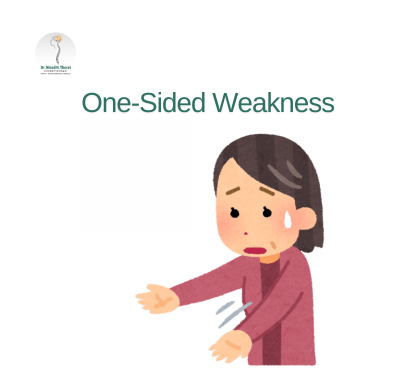
One-sided weakness is one of those symptoms that instantly creates fear. A person may suddenly feel one arm becoming heavy, one leg dragging slightly, or one side of the face not moving properly. Sometimes it lasts just a few minutes. Sometimes it comes with a headache. Sometimes it appears without pain at all. Families often get confused because the symptom can point in different directions. One possibility is a migraine-related episode, especially in people who get aura symptoms. But another possibility is much more urgent — a stroke, a transient ischemic attack, a seizure-related event, or another brain problem that should never be taken lightly.
This confusion is common because not every neurological symptom means the same thing. Some people experience visual blurring, flashing lights, numbness, and temporary weakness as part of a rare migraine pattern. Others may think it is “just weakness from low BP,” “a pinched nerve,” or “stress.” Unfortunately, when true brain-related weakness is mistaken for something harmless, valuable treatment time may be lost. That is why one-sided weakness should never be casually dismissed, especially if it starts suddenly or is clearly new.
In India, this symptom is often explained away in the first few minutes. Someone says the person did not eat properly. Someone else says it is because of fatigue, heat, anxiety, gas, or cervical weakness. A family member may ask the person to lie down and wait. That waiting period is exactly where risk increases. If weakness is related to stroke, every passing minute matters. If it is linked to a seizure, recurrent event, or inflammatory condition, early medical assessment still matters.
At the same time, not every case of one-sided weakness is a stroke. There are genuine stroke mimics. Migraine with aura, especially hemiplegic migraine, can produce weakness on one side of the body. Some people may first experience tingling or visual changes and later notice clumsiness or heaviness. Because these conditions can resemble each other so closely, proper evaluation becomes essential.
This blog explains what one-sided weakness really means, how migraine-related weakness differs from stroke-like weakness, what symptoms should raise immediate concern, how doctors investigate the cause, and when it should be treated as an emergency rather than a symptom to observe at home.
What is meant by one-sided weakness?
One-sided weakness means a noticeable loss of strength or control affecting one side of the body. It may involve:
- one arm,
- one leg,
- one side of the face,
- or a combination of these.
Some people describe it as true weakness — “I could not lift my arm properly.” Others describe it as heaviness — “my hand felt dead” or “my leg was not supporting me normally.” In real life, both descriptions matter. Weakness does not always begin as complete paralysis. It can start as clumsiness, slower movement, dropping objects, uneven walking, difficulty buttoning clothes, or slurred speech because one side of the face is not working properly.
The key issue is that when one side of the body behaves differently from the other, the brain becomes an important part of the discussion. That is because the brain controls opposite-sided body movement. If the left side of the brain is affected, weakness may show up on the right side of the body. If the right side of the brain is affected, symptoms may appear on the left.
Why this symptom should never be ignored first
One-sided weakness is not a routine body complaint like mild tiredness or muscle stiffness. It is considered a neurological warning sign because it may reflect a problem in the brain, spinal cord, or nerve pathway. The most urgent reason is stroke, where blood flow to part of the brain becomes blocked or a blood vessel bleeds. But it can also occur with transient ischemic attacks, seizures, migraines with motor aura, brain infections, tumors, inflammation, or metabolic disturbances.
The reason doctors treat it seriously is simple: the symptom may look temporary, but the underlying cause may not be harmless. A few minutes of weakness followed by apparent recovery can still represent a transient ischemic attack, which is a major warning sign for a possible future stroke. Similarly, migraine-related weakness may eventually settle, but only after more dangerous possibilities are ruled out.
People noticing repeated uneven movement, sudden heaviness in one arm, unexplained dragging of one leg, or neurological episodes that do not feel normal may benefit from consultation with an experienced
Brain Specialist Doctor In Nashik
when a proper brain and nerve evaluation is needed beyond guesswork.
Can migraine really cause one-sided weakness?
Yes, but it is not the most common explanation. A rare form of migraine called hemiplegic migraine can cause temporary weakness on one side of the body. In such episodes, the person may experience migraine aura symptoms before or during the headache. These may include:
- flashing lights,
- visual zig-zag patterns,
- numbness,
- tingling,
- speech difficulty,
- and one-sided weakness.
This can be frightening because it strongly resembles a stroke. In some people, the weakness lasts minutes. In others, it may last longer. Because of the overlap, doctors do not assume a first-time episode is “just migraine” unless the pattern clearly fits and more dangerous causes have been excluded.
That is especially important for people who have never had this kind of migraine before. A known history of migraine does not automatically make new one-sided weakness safe to ignore. New weakness deserves medical attention even in someone who gets headaches regularly.
What is hemiplegic migraine?
Hemiplegic migraine is a rare subtype of migraine in which the aura phase includes temporary motor weakness. The word “hemiplegic” refers to one-sided weakness or paralysis. Symptoms may include:
- weakness in the arm or leg,
- facial drooping feeling,
- numbness or tingling,
- trouble speaking,
- visual aura,
- and headache.
In some people, the headache is severe and classic. In others, the weakness may feel more dramatic than the pain itself. The symptoms usually reverse, but that does not reduce the need for medical assessment, especially if the episode is new, more intense than before, or accompanied by unusual confusion.
A migraine pattern often has a sequence. Some people first notice visual aura, then sensory symptoms, then weakness, followed by headache. Stroke, by contrast, often presents more suddenly and without that gradual march of aura symptoms. Still, this difference is not reliable enough for self-diagnosis during an acute episode.
How stroke-related weakness differs from migraine-related weakness
This is one of the most important questions for patients and families. While there can be overlap, a few patterns may help:
Stroke-related weakness often:
- begins suddenly,
- is clearly new,
- affects face, arm, or leg,
- may come with speech trouble,
- may not include headache,
- may cause facial asymmetry,
- may include balance trouble or vision loss.
Migraine-related weakness may:
- follow aura symptoms,
- build over several minutes,
- come with a migraine history,
- occur with visual changes or tingling,
- be followed by headache,
- improve after the migraine settles.
But here is the most important message: you should not rely on this comparison at home to decide that the situation is safe. If one-sided weakness is sudden or unfamiliar, it should be assessed urgently.
What other causes can produce one-sided weakness?
One-sided weakness is not caused only by migraine or stroke. Other possibilities include:
Transient ischemic attack
A TIA can cause brief weakness that improves on its own. People often feel relieved when it passes, but this is exactly the moment when medical care becomes critical because a bigger stroke can follow.
Seizure-related weakness
After certain seizures, a person may have temporary weakness on one side, known as post-episode weakness. This can confuse families, especially if the seizure was subtle or unwitnessed.
Brain lesions or tumors
Masses affecting motor areas of the brain can gradually or intermittently produce weakness.
Infection or inflammation
Brain infections, autoimmune inflammation, or demyelinating diseases can affect strength and coordination.
Functional neurological episodes
Sometimes symptoms occur without a structural lesion in the usual sense, but these still need careful neurological assessment and should not be dismissed as “imagined.”
Severe metabolic or electrolyte disturbances
These may not always present classically, but abnormal body chemistry can affect nerve and muscle control.
Why Indian families often delay urgent response
Several common habits lead to delay:
- assuming the person just “slept wrong,”
- blaming low sugar without checking,
- linking weakness to cervical pain,
- waiting for the person to “feel normal,”
- calling local advice before going to hospital,
- hoping rest will settle the problem.
This happens in both urban and rural settings. In cities, people delay because of traffic, work schedules, and uncertainty about where to go. In smaller towns, they may first visit a general clinic even when emergency evaluation is needed. The problem is not lack of care; it is lack of recognition.
A person with one-sided weakness should not be told to wait and see for hours, especially if the onset is sudden. Even if the weakness improves, the episode still needs assessment.
What symptoms make one-sided weakness more dangerous?
Please treat the situation with greater urgency if one-sided weakness appears with:
- facial drooping,
- slurred speech,
- confusion,
- difficulty understanding words,
- sudden severe headache,
- loss of balance,
- double vision,
- one-sided numbness,
- a seizure,
- repeated vomiting,
- reduced consciousness.
The more of these symptoms are present together, the more important immediate emergency evaluation becomes.
When should it be treated like an emergency?
The answer is simple: if the weakness is new, sudden, or unexplained, treat it as urgent.
Please seek emergency care if:
- it starts suddenly,
- one arm or leg is clearly weaker,
- the face looks uneven,
- speech changes,
- walking becomes difficult,
- the person seems confused,
- symptoms are the first of their kind,
- the episode is more severe than previous migraine symptoms.
Even if the person says, “I think this is my usual headache,” a first episode of weakness should still be checked properly. Migraine can mimic serious disease, but serious disease can also hide inside what looks like migraine.
How doctors evaluate one-sided weakness
Doctors usually focus on three things:
- When the symptom started
- How it progressed
- What other symptoms came with it
Evaluation may include:
- neurological examination,
- blood pressure and sugar check,
- brain imaging,
- blood tests,
- heart rhythm assessment,
- and sometimes EEG if seizure is suspected.
The exact tests depend on the story. Sudden weakness raises stroke questions. Repeated episodes with aura may raise migraine questions. Episodes with confusion or blank spells may raise seizure questions.
Patients dealing with recurring neurological symptoms, changing migraine patterns, or unexplained weakness on one side may find it useful to explore educational topics under
to better understand when symptoms need urgent evaluation and when specialist follow-up becomes important.
Can one-sided weakness happen without headache?
Yes, and that is one reason people get confused. Stroke often happens without headache. Some migraine episodes can also present with neurological aura symptoms that are more prominent than the pain. Seizure-related weakness may follow an event without any headache at all.
So headache is not the deciding factor. The real concern is the pattern of weakness itself.
What should family members do immediately?
If someone develops sudden one-sided weakness:
- note the exact time it started,
- do not give food or water if swallowing seems affected,
- do not wait for sleep to “reset” the body,
- do not assume it is acidity, stress, or cervical pain,
- take the person for urgent assessment,
- carry previous medical reports if available.
Also, do not give random medicines from home because they may confuse the picture or delay the next step.
What happens if it is ignored?
Ignoring one-sided weakness can lead to:
- missed stroke treatment window,
- progression from TIA to stroke,
- repeated untreated seizure episodes,
- delayed diagnosis of serious neurological disease,
- worse long-term recovery,
- avoidable disability.
This is why awareness matters so much. The symptom may look temporary, but the decision around it has long-term consequences.
How migraine patients can stay alert without panicking
People with known migraine should not live in fear of every symptom. But they should stay alert to changes. Please seek medical review if:
- weakness is a new feature,
- the episode feels different from usual migraine,
- the weakness lasts longer,
- speech is more affected,
- confusion appears,
- headaches are becoming more frequent,
- attacks are more disabling.
A known migraine history is useful information for the doctor, but it is not a shield against every other diagnosis.
Tips for prevention and awareness
A few simple habits help:
- keep track of headache and aura patterns,
- record new neurological symptoms,
- control blood pressure, sugar, and cholesterol,
- avoid smoking and tobacco,
- sleep regularly,
- do not ignore repeated one-sided symptoms,
- seek early evaluation instead of repeated self-treatment.
People with migraine should also identify triggers, but they must not use “it’s my migraine” as a reason to ignore entirely new weakness.
When should you consult a neurologist?
You should consult a neurologist if:
- one-sided weakness has happened even once without clear explanation,
- migraine symptoms are changing,
- headache episodes now include weakness,
- tingling, speech changes, or vision symptoms are increasing,
- there is a family history of stroke or seizure,
- episodes are affecting daily life or work.
For patients who need focused evaluation of weakness, migraine aura, seizure-like events, or sudden neurological changes, consulting a
can help clarify whether the pattern fits migraine, TIA, seizure, or another brain-related condition.
One-sided weakness should never be treated as a casual symptom. In some cases, it may be linked to a rare migraine pattern such as hemiplegic migraine. But in other cases, it may be the first warning sign of stroke, TIA, seizure, or another important neurological problem. That is why the safest approach is not guessing — it is timely evaluation.
The key question is not “Could this be migraine?” The key question is “Could this be something dangerous that should not be missed?” If the weakness is sudden, new, clearly one-sided, or associated with speech, face, balance, or confusion changes, it deserves urgent medical attention.
Awareness can change outcomes. A person who gets checked early may simply hear that it was migraine and go home informed. But a person who delays when the cause is stroke may lose crucial treatment time. When one side of the body suddenly stops behaving normally, the body is asking for attention. That message should not be ignored.
FAQs
1. Can migraine cause weakness on one side of the body?
Yes, a rare type called hemiplegic migraine can cause temporary one-sided weakness along with aura symptoms and headache. But a first-time episode should still be checked urgently.
2. How do I know if one-sided weakness is a stroke or migraine?
You cannot safely confirm that at home. Sudden new weakness, especially with speech trouble, facial droop, confusion, or balance problems, should be treated like a medical emergency.
3. If the weakness goes away in a few minutes, is it still serious?
Yes. Even brief weakness can be a transient ischemic attack or another neurological warning sign. Recovery does not mean it was harmless.